Water Management in Coastal Landscapes
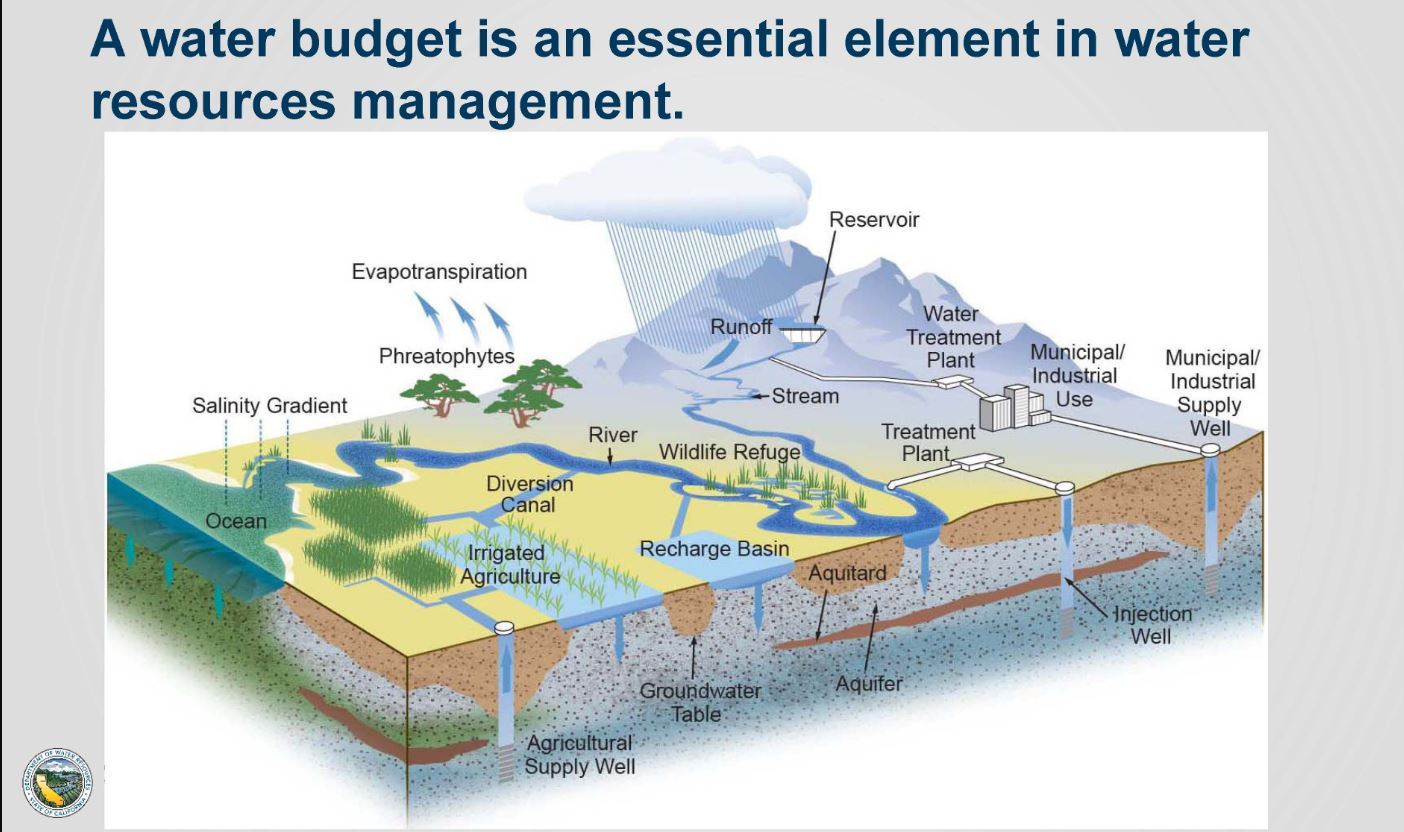
Integrated Water Management (Source: mavensnotebook.com)
In coastal hospitality design, water is both a precious resource and a potential hazard. Managing it responsibly means protecting freshwater sources, minimizing pollution, and enhancing ecosystem function. This chapter explores integrated water strategies that reduce reliance on municipal supplies, prevent runoff into sensitive marine environments, and elevate the guest experience.
Rainwater Harvesting, Greywater Reuse, and Irrigation Efficiency
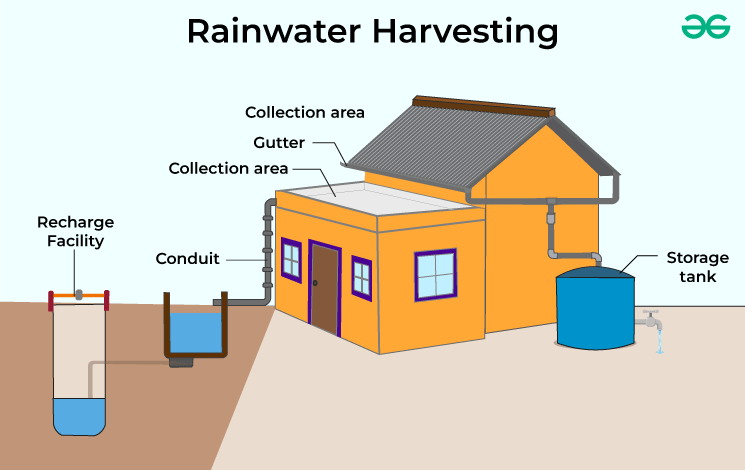
Rainwater Harvesting (Source: geeksforgeeks.org)
Sustainable resorts increasingly capture, store, and reuse water on-site. Rainwater harvesting systems channel roof runoff into underground tanks or cisterns, which can be used for irrigation, cleaning, and even cooling systems. Greywater—gently used water from sinks and showers—is treated and reused for landscaping.
Smart irrigation systems use sensors to assess soil moisture, rainfall, and evaporation to deliver water precisely where and when needed. Drip irrigation, hydrozoning (grouping plants by water needs), and drought-tolerant species amplify efficiency.
A 2020 study by the Alliance for Water Efficiency found that combining rainwater and greywater reuse can reduce resort freshwater demand by 40–70% annually in tropical and arid regions.
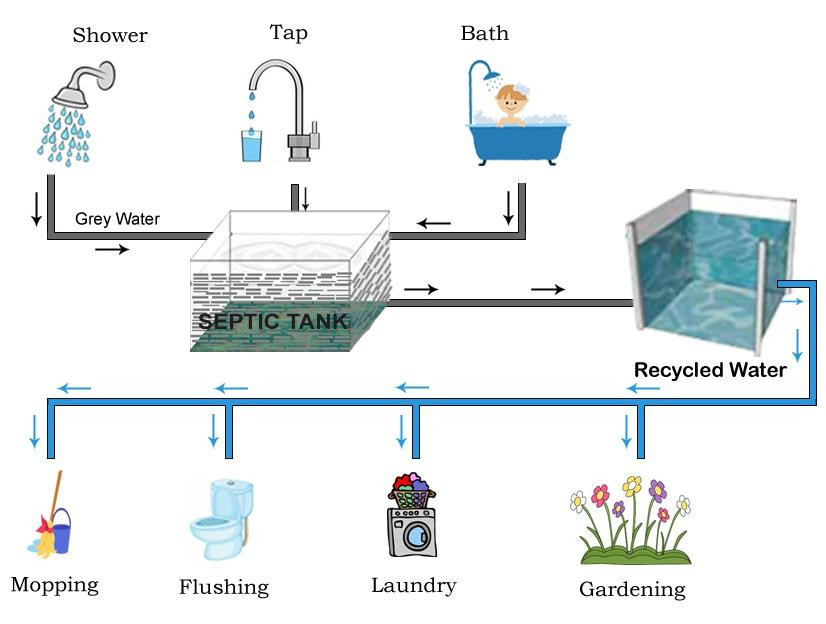
Grey Water Recycling (Source: zandxmechanicalinstallations.com)
Bioswales, Infiltration Zones, and Constructed Wetlands
In areas of heavy rainfall or storm surge, water needs to be managed in place, rather than quickly drained. Nature-based solutions slow, filter, and infiltrate stormwater:
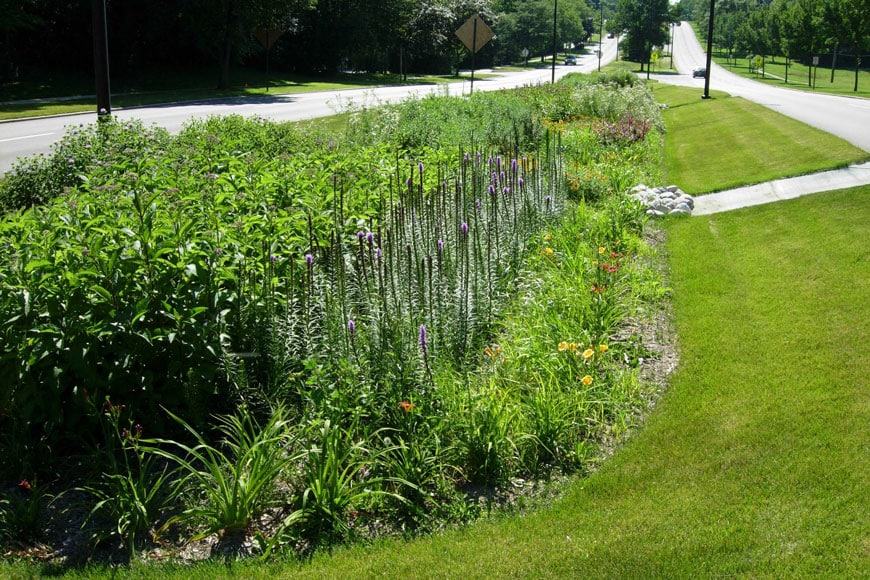
Bioswale in Greendale, Wisconsin, USA (Source: Aaron Volkening_reliance-foundry.com)
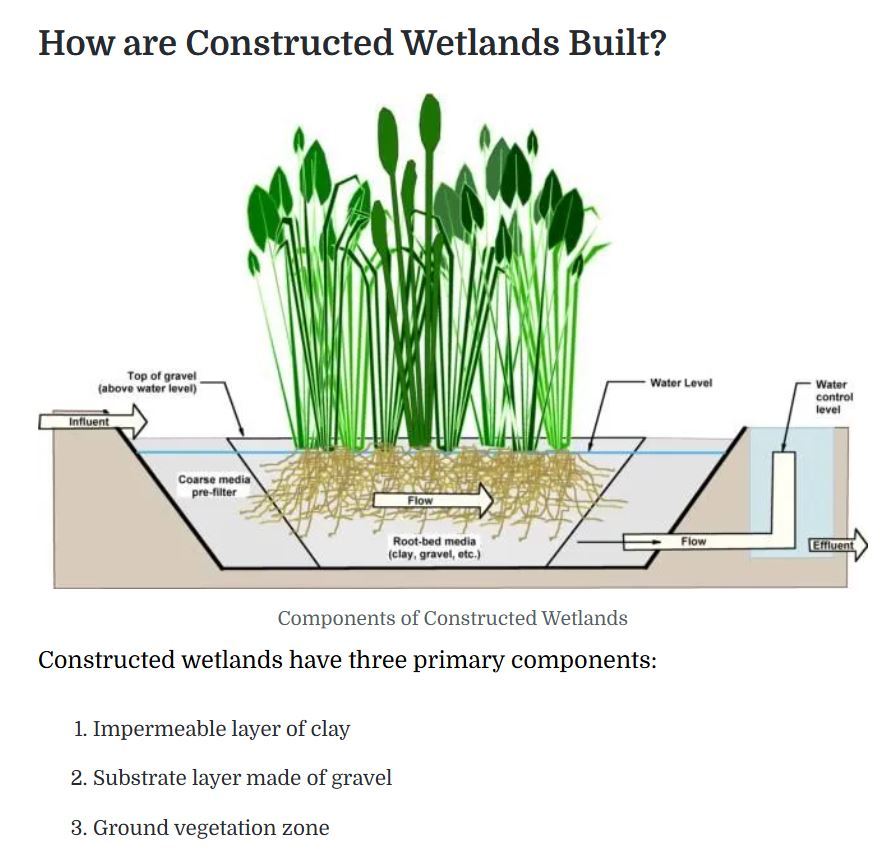
Constructed Wetlands (Source: theconstructor.org)
These systems double as wildlife habitats and landscape features, turning a technical necessity into an ecological asset. The EPA reports that constructed wetlands can remove up to 90% of nitrogen and 95% of suspended solids from greywater.
Pool Systems that Avoid Chemical Runoff
Hotel pools are major water consumers—and often a source of pollution when chlorinated water leaks or is discharged into the environment. Sustainable approaches include:
- Natural pools: Use biological filters, aquatic plants, and gravel beds instead of chemicals.
- Saltwater systems: Use electrolysis to generate chlorine from salt, reducing the need for synthetic additives.
- Backflow prevention and closed-loop filtration: Ensure that no chemically treated water reaches the groundwater or nearby ecosystems.
Resorts are also adopting pool deck designs that channel rain into bioswales rather than storm drains, minimizing runoff during tropical rains.
Case Study: Alila Villas Uluwatu, Bali - Pioneering Sustainable Water Management
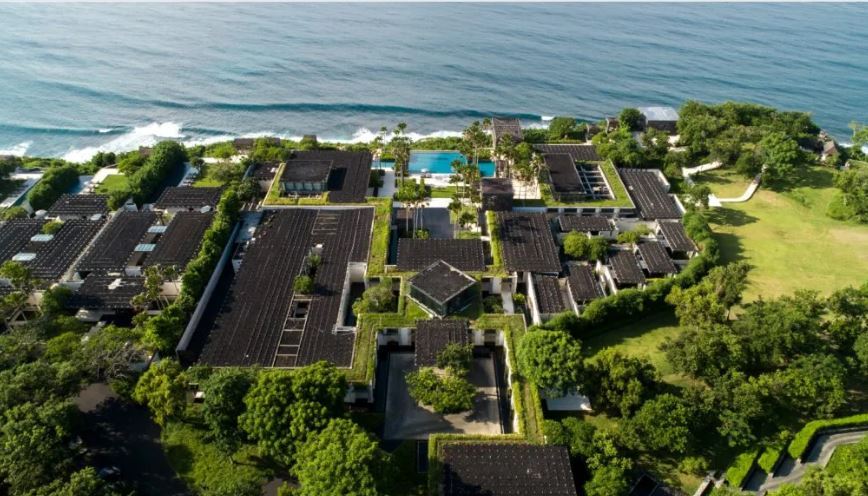
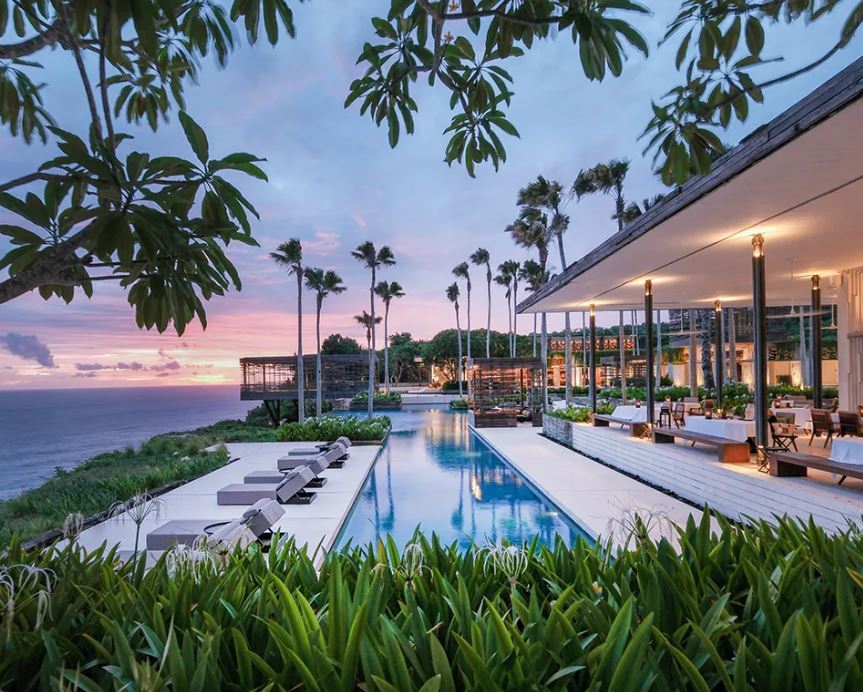
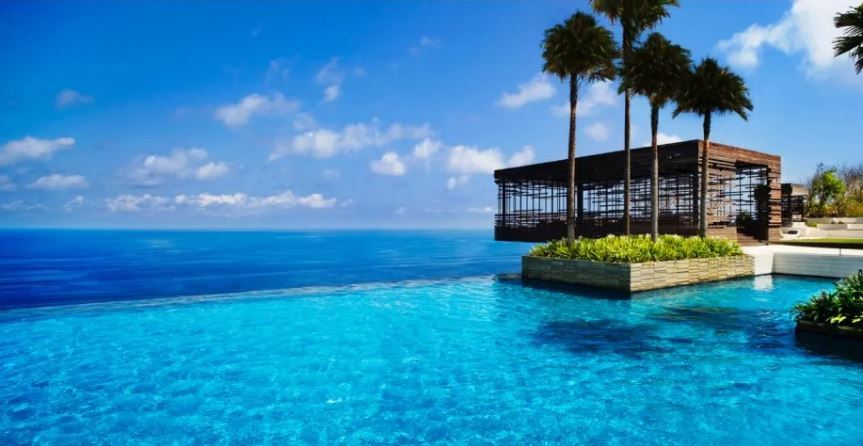
Perched on a dramatic limestone cliff on Bali's Bukit Peninsula, Alila Villas Uluwatu seamlessly integrates luxury with sustainability. Designed by the renowned architectural firm WOHA, the resort exemplifies environmentally sustainable design (ESD), earning the highest level of certification from EarthCheck.
Alila Villas Uluwatu exemplifies how water-smart design can elevate both form and function:.
Location: Uluwatu, Bali, Indonesia
Eco-Features:
-
Rainwater Harvesting: Each villa is equipped with a rainwater collection system, capturing and storing rainwater for various uses, including irrigation and replenishing water features.
-
Greywater Recycling: The resort employs an extensive greywater system, treating wastewater from showers and sinks for reuse in toilet flushing and landscape irrigation.
-
Aquifer Recharge: Through the use of soaks, swales, and rain gardens, the resort facilitates the natural replenishment of groundwater, enhancing the local water table.
-
Cliffside rain gardens: Native vegetation absorbs stormwater while stabilizing soil and protecting the coral reef below from sedimentation.
-
Natural Pools: Alila Villas Uluwatu utilizes saltwater pools, reducing the need for chemical treatments and minimizing environmental impact.
-
Sustainability Lab: Established in 2019, the on-site Sustainability Lab transforms waste into valuable resources, producing compost for the organic garden and upcycling materials like glass and tires.
-
Efficient fixtures and fittings: Low-flow appliances and guest education campaigns reduce consumption without compromising luxury.
Nightly Rate:
Starting from approximately $1,000 USD per night, varying based on villa type and season.
Website:
https://www.alilahotels.com/uluwatu/
The resort’s water systems are integral to its EarthCheck Platinum certification and serve as a teaching model for water-sensitive tropical design.

Alila Villas Uluwatu has eliminated all single-use plastic usage throughout the resort. They produce their own drinking water using an on-site water purification system. (Source: alilahotels.com)

Alila Villas Uluwatu embrace environmentally sustainable design principles like using local materials from the special Bali savannah ecosystem to conserving water through their rain garden.
Why It Matters
Water is a finite resource under increasing pressure from tourism and climate extremes. Sustainable water strategies—rooted in reuse, ecological engineering, and conservation—enable coastal resorts to flourish while respecting their environment. These practices reduce operational costs, mitigate environmental impact, and offer guests a sense of connection to natural cycles.
Expert Insight: Dr. Jackie King, Freshwater Ecologist and Stockholm Water Prize Laureate
“We can no longer treat water as infinite. The future of design lies in closing the loop—where every drop counts and nothing is wasted.”