Climate-Responsive Planning
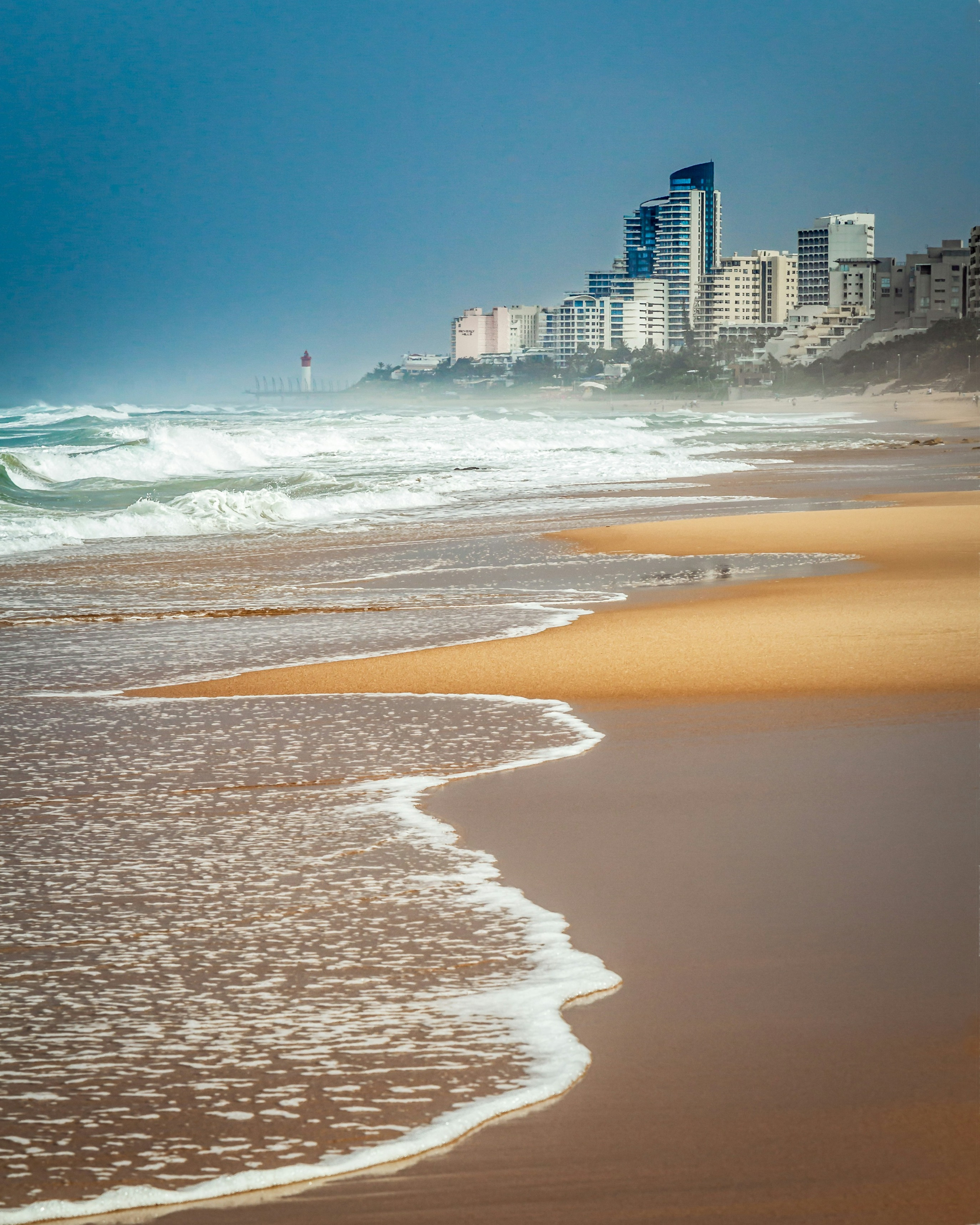
Coastal city (Source: Brahm Meyer_unsplash.com)
Coastal environments are shaped by powerful natural forces—wind, salt spray, high humidity, and intense sunlight. These conditions influence material choices, planting strategies, and outdoor space usability. The analysis of wind patterns and solar exposure is critical to optimize comfort without artificial energy use.
Designing in these contexts requires more than aesthetic sensitivity; it demands a deep understanding of microclimatic behavior and the ability to adapt architecture and landscapes accordingly. Climate-responsive planning not only improves comfort and functionality but significantly reduces energy and water consumption.
Wind, Salt, Humidity, and Solar Orientation Analysis
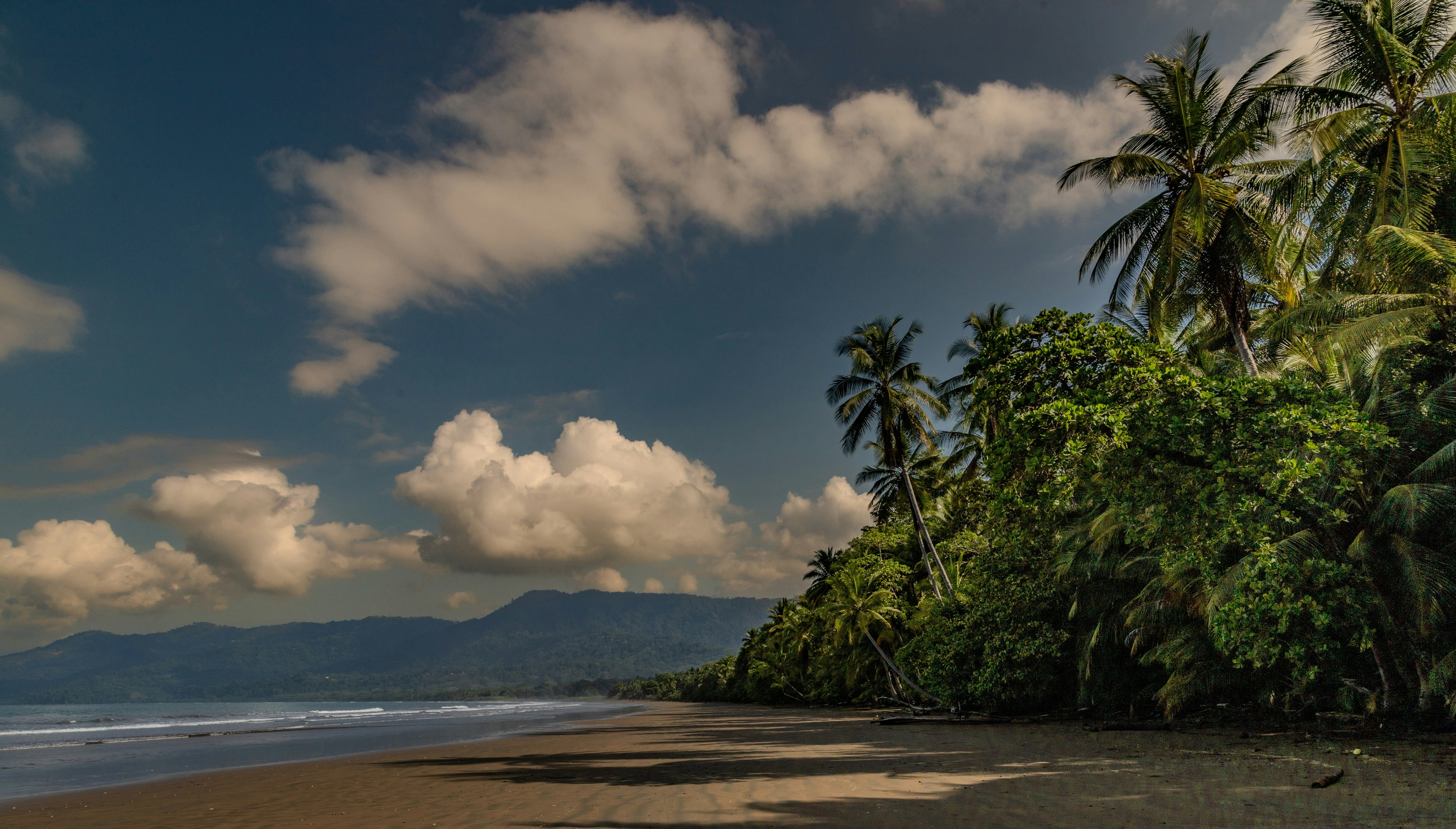
Coastal Environment (Source: Bernd Dittrich_unsplash.com)
Coastal sites are often exposed to prevailing winds that can be harnessed or mitigated depending on their direction and intensity. Wind rose diagrams and site-specific meteorological data inform these orientation strategies.
- Wind: In hot, humid climates, prevailing breezes can serve as natural ventilation channels if properly integrated into site planning. However, unmitigated winds can lead to discomfort in dining terraces or pool areas and can erode soil and dune systems.
- Salt: Salt-laden sea air accelerates the corrosion of metals and deterioration of building materials. Design strategies should include setback zones, salt-tolerant plant buffers, and the use of non-corrosive materials like teak, stainless steel (316 grade), or fiber cement.
- Humidity: Coastal humidity increases the risk of mold, mildew, and wood decay. Siting structures to encourage airflow—such as raised buildings with ventilated undercrofts—and maximizing sun exposure on shaded facades helps reduce dampness.
- Solar Orientation: Understanding the sun path helps design shaded courtyards and strategically orient windows and openings to reduce direct heat gain. East- and west-facing exposures in tropical latitudes require vertical shading elements or vegetation.
A University of Queensland study (2020) revealed that climate-aligned orientation reduced resort energy use by 40%, supporting the case for design that works with, not against, nature.
Passive Design Strategies for Outdoor Spaces
Passive design embraces the environmental conditions of a site to optimize comfort and efficiency without mechanical input. Key approaches include:
- Natural Shade: Integrating indigenous tree species, pergolas covered with climbing vines, or shaded pavilions can cool spaces by up to 10°C. Shade improves usability of outdoor lounges, walkways, and dining zones.

Pergola (Source: Nicolas Lysandrou_unsplash.com )
- Evaporative Cooling: Water features like mist gardens, shallow basins, and planted wetlands absorb heat and release moisture, lowering ambient temperatures. These can be paired with shaded seating for enhanced microclimates.
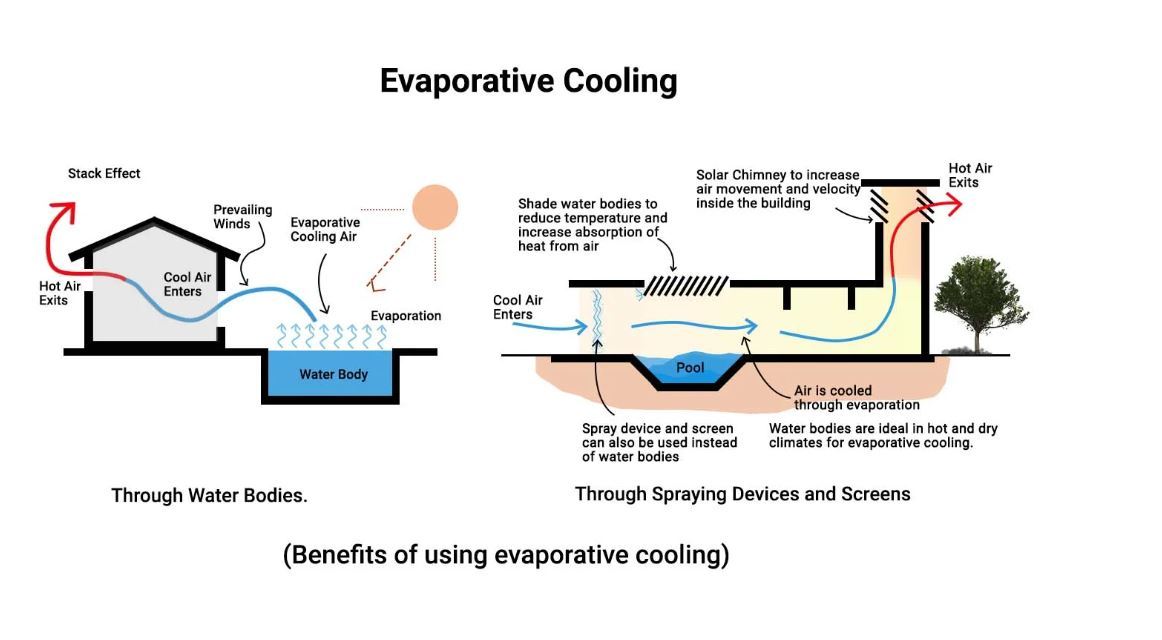
Evarporative cooling (Source: layakarchitect.com)
- Ventilation Corridors: Aligning paths and open spaces with prevailing wind directions helps channel breezes through communal areas, supporting thermal comfort and reducing the need for fans.
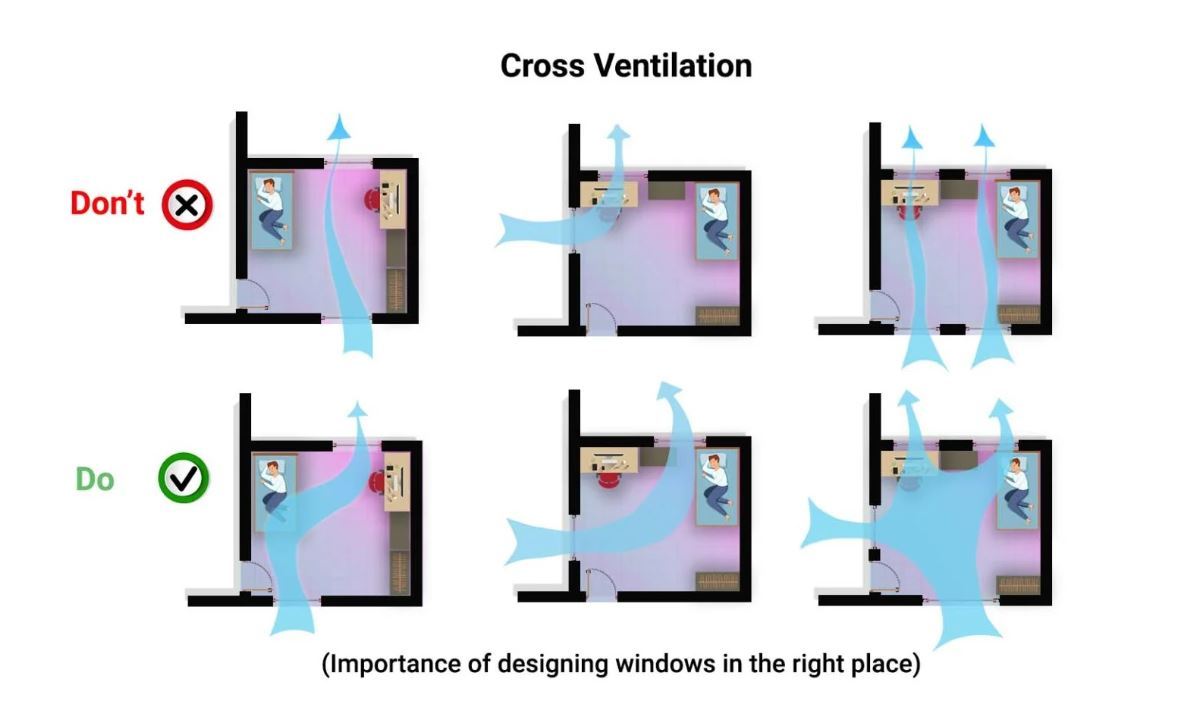
Cross ventilation (Source: layakarchitect.com)
- Material Choice: Selecting light-toned, porous, and permeable surfaces reduces heat retention and runoff. Shell aggregates, local limestone, or sand-set pavers reflect heat and help maintain pedestrian comfort.
Expert Insight: Lisa Matthiessen, Sustainability Director, HGA Architects
“Designing passively isn’t just a climate strategy—it’s a sensory one. Shade, breeze, and water connect people to place in unforgettable ways.”
Siting Buildings and Amenities to Reduce Microclimate Disruption
Strategic siting considers how built forms interact with air, heat, and water flows across the site. Careful placement avoids exacerbating temperature extremes or altering natural drainage.
- Airflow Preservation: Aligning buildings with wind corridors ensures airflow is not blocked, preserving breezes in public zones.
- Vegetation Protection: Avoid clearing vegetation in exposed zones; keep trees intact to preserve shade and transpiration effects.
- Heat Island Mitigation: Distribute hardscape surfaces to avoid clustering thermal mass. Break up paving areas with green islands, bioswales, or shaded trellises.
- Acoustic and Visual Buffers: Cluster rooms or villas around existing landforms and planting to preserve privacy and reduce noise.
Studies by the Tropical Architecture Group at the National University of Singapore indicate that decentralized, tree-integrated siting can reduce surface temperatures by 2–4°C compared to conventional layouts.
Environmental Design + Construction Magazine (2021) reports that resort developments that use decentralized, low-density site planning experience up to 30% lower heat retention and improved guest satisfaction due to preserved green cover.
Expert Insight: Michael Pawlyn, Architect & Biomimicry Expert
“We need to design like nature – adaptive, efficient, and regenerative. In hot climates, copying forest ecosystems for shading and airflow can outperform mechanical cooling.”
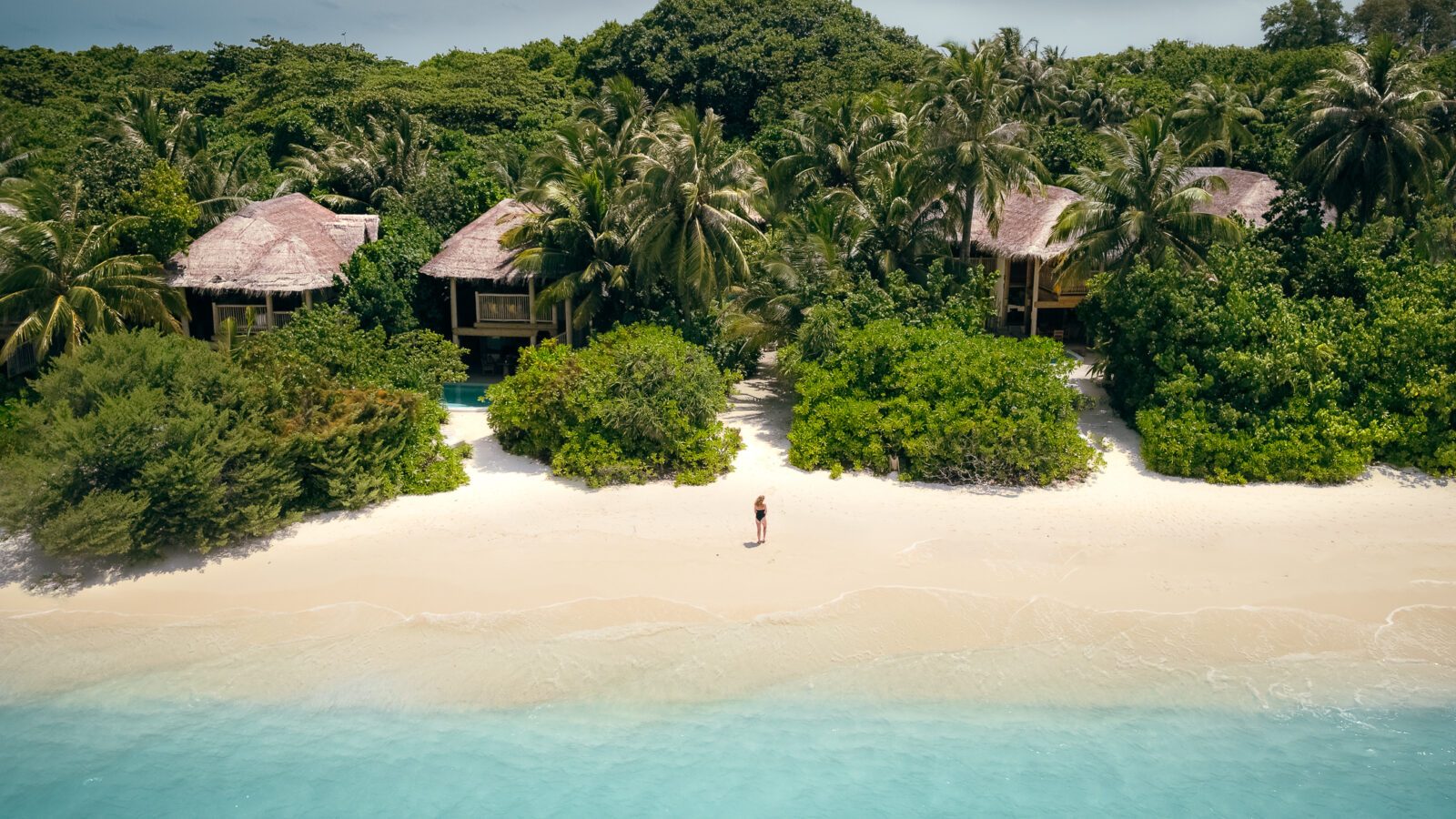
Case Study: Soneva Fushi, Maldives
(Source: soneva.com)
Location: Kunfunadhoo Island, Baa Atoll, Maldives.
Situated within the Baa Atoll UNESCO Biosphere Reserve, Soneva Fushi offers a secluded and pristine environment that harmoniously blends luxury with nature and exemplifies climate-responsive design in a sensitive ecosystem.
Eco-Features:
-
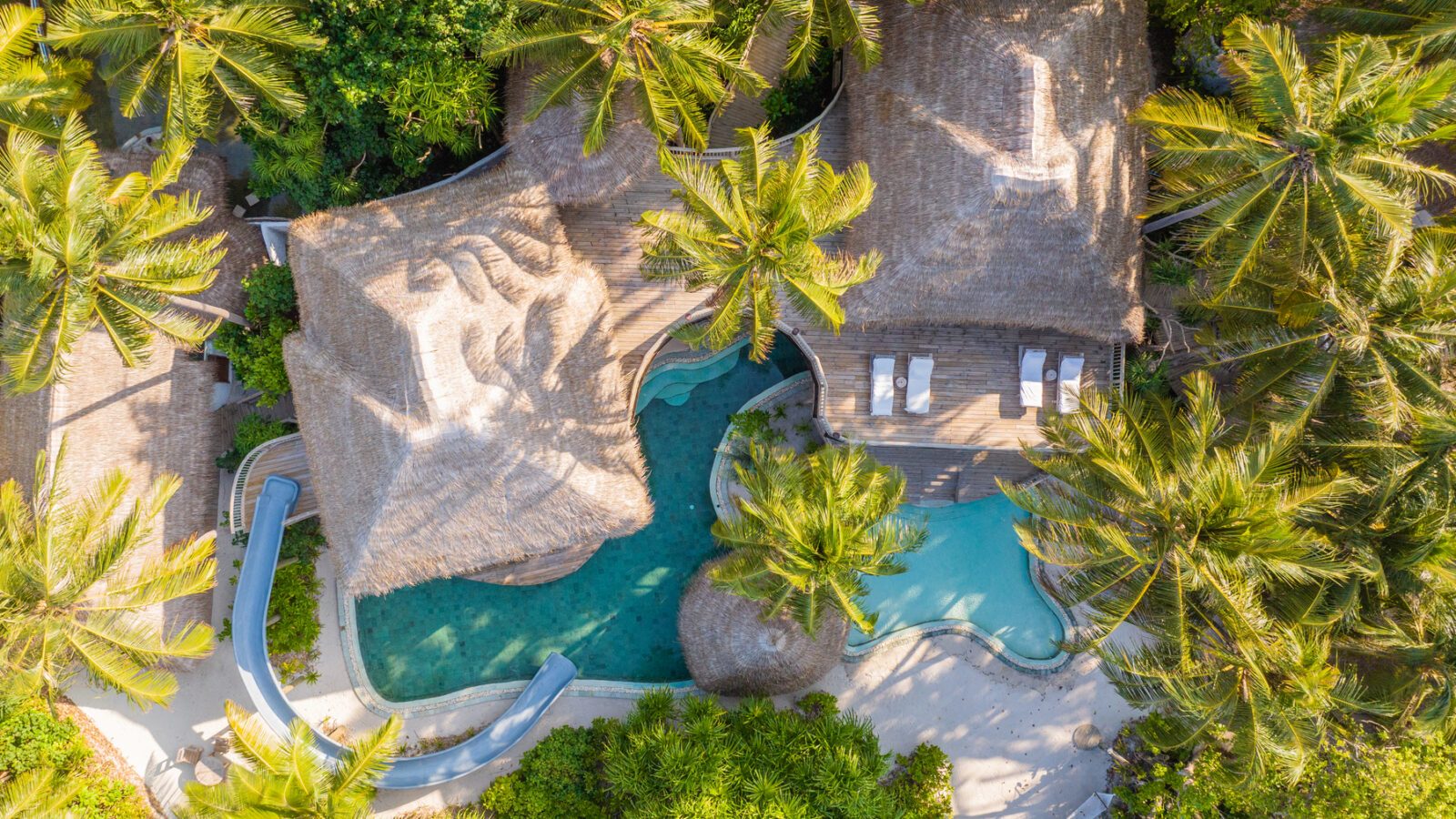
Sustainable Architecture: The resort's design resembles a traditional Maldivian fishing village, utilizing reclaimed teakwood and sustainable materials. Villas are constructed with natural ventilation systems, reducing the need for air conditioning.
(Source: soneva.com)
- Renewable Energy: Soneva Fushi has installed a 5.2MWp solar PV system with 4.7MWh of battery storage, ensuring that 40% of its electricity comes from renewable energy sources.
-
Waste Reduction: The resort operates its own Eco Centro waste management facility, aiming for zero waste to landfill by 2025. The facility composts organic waste, recycles materials, and even repurposes Styrofoam waste into lightweight construction blocks.
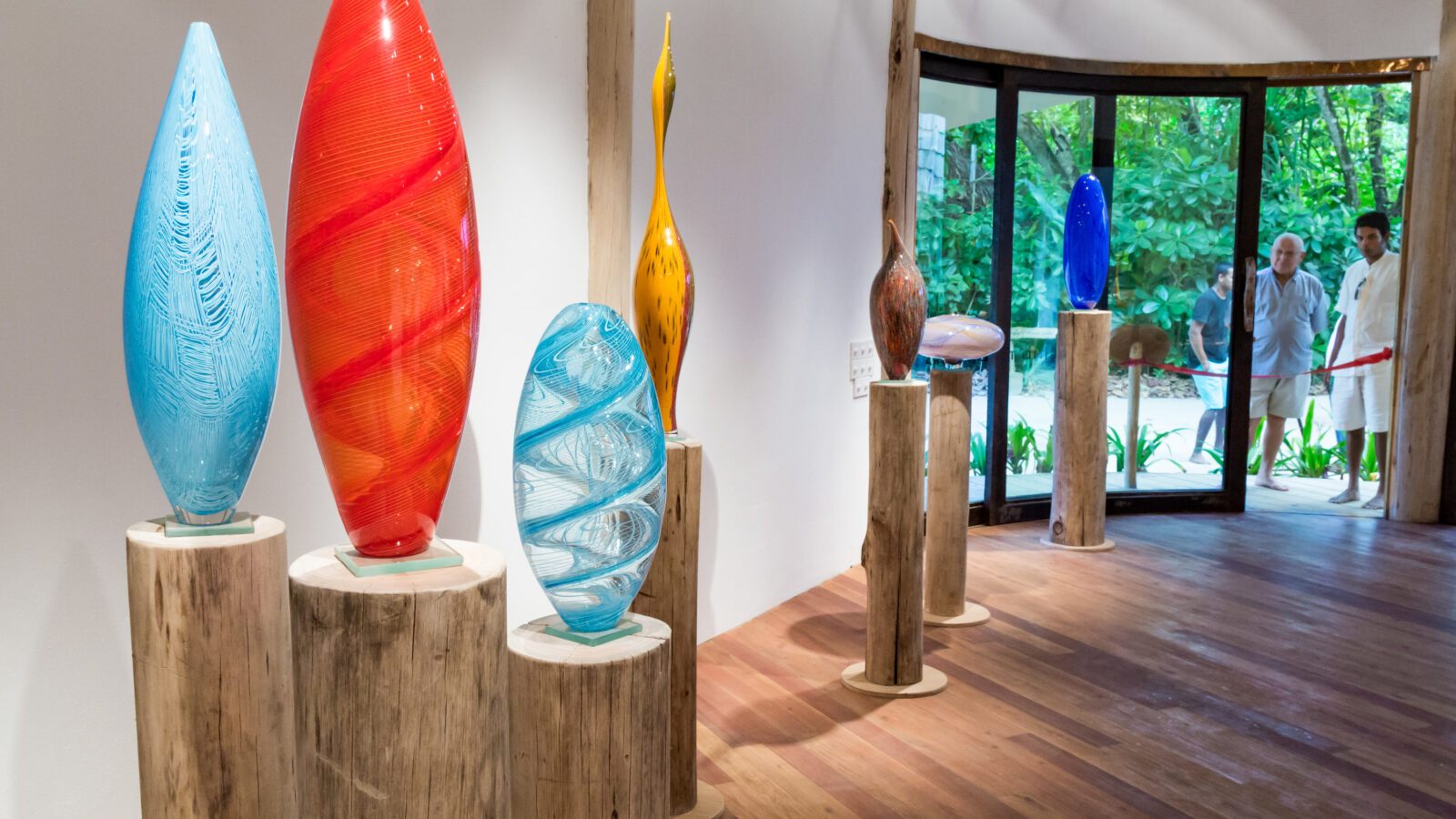
Bespoke glassware recycled from used glass bottles from Soneva Fushi (Soure: soneva.com)
-
Marine Conservation: Soneva Fushi actively engages in coral reef restoration and marine conservation programs, educating guests on the importance of preserving the delicate marine ecosystem.
-
Community Engagement: The resort runs environmental workshops for local schools and offers English classes to local children, fostering community development and environmental awareness.
-
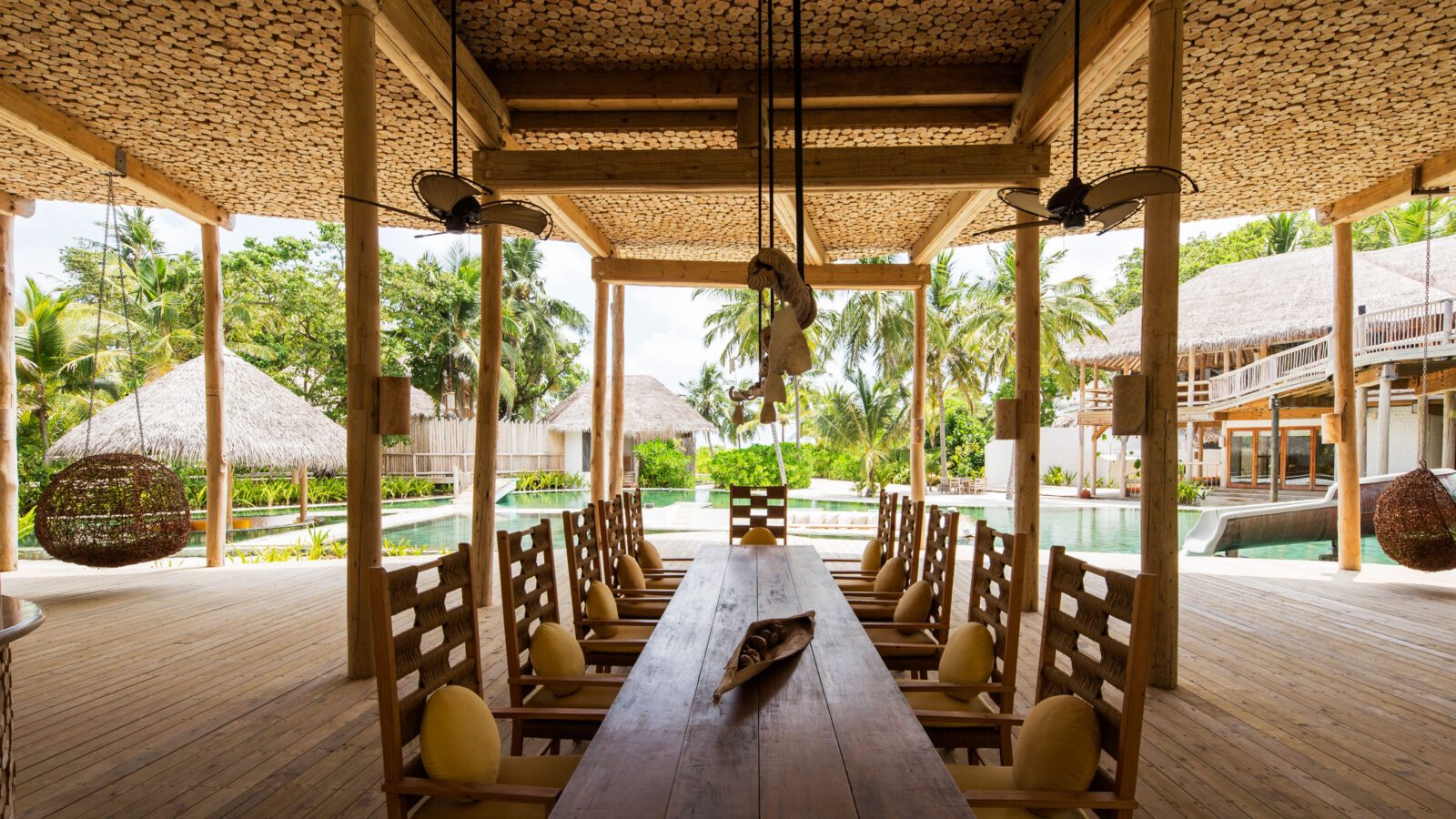
Natural Ventilation: Villas are open-sided, screened with louvered timber, and strategically placed for maximum cross-ventilation. This eliminates the need for air conditioning in 80% of the built area.
(Source: soneva.com)
-
Minimal Hard Surfaces: Paths are made of compacted sand, and villas rest on stilts or piers to minimize heat radiation and soil impact.
-
Dense Canopy Cover: The design preserved nearly all of the island’s mature native trees, which provide natural shading and cooling while preserving biodiversity.
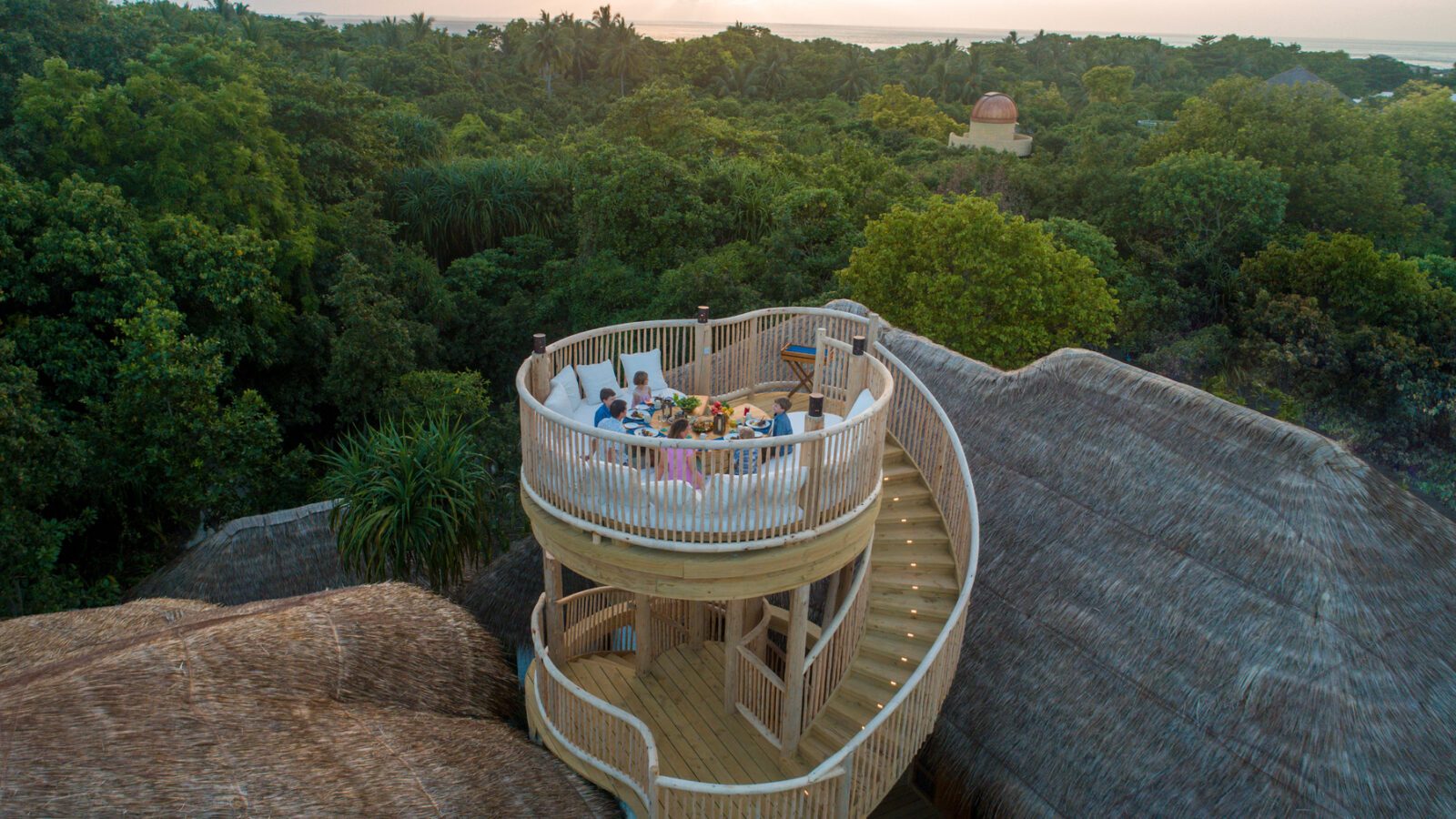
(Source: soneva.com)
-
Low-Tech Luxury: Thick adobe walls, thatched roofing, deep overhangs, and ceiling fans create comfort through material intelligence, not high-energy systems
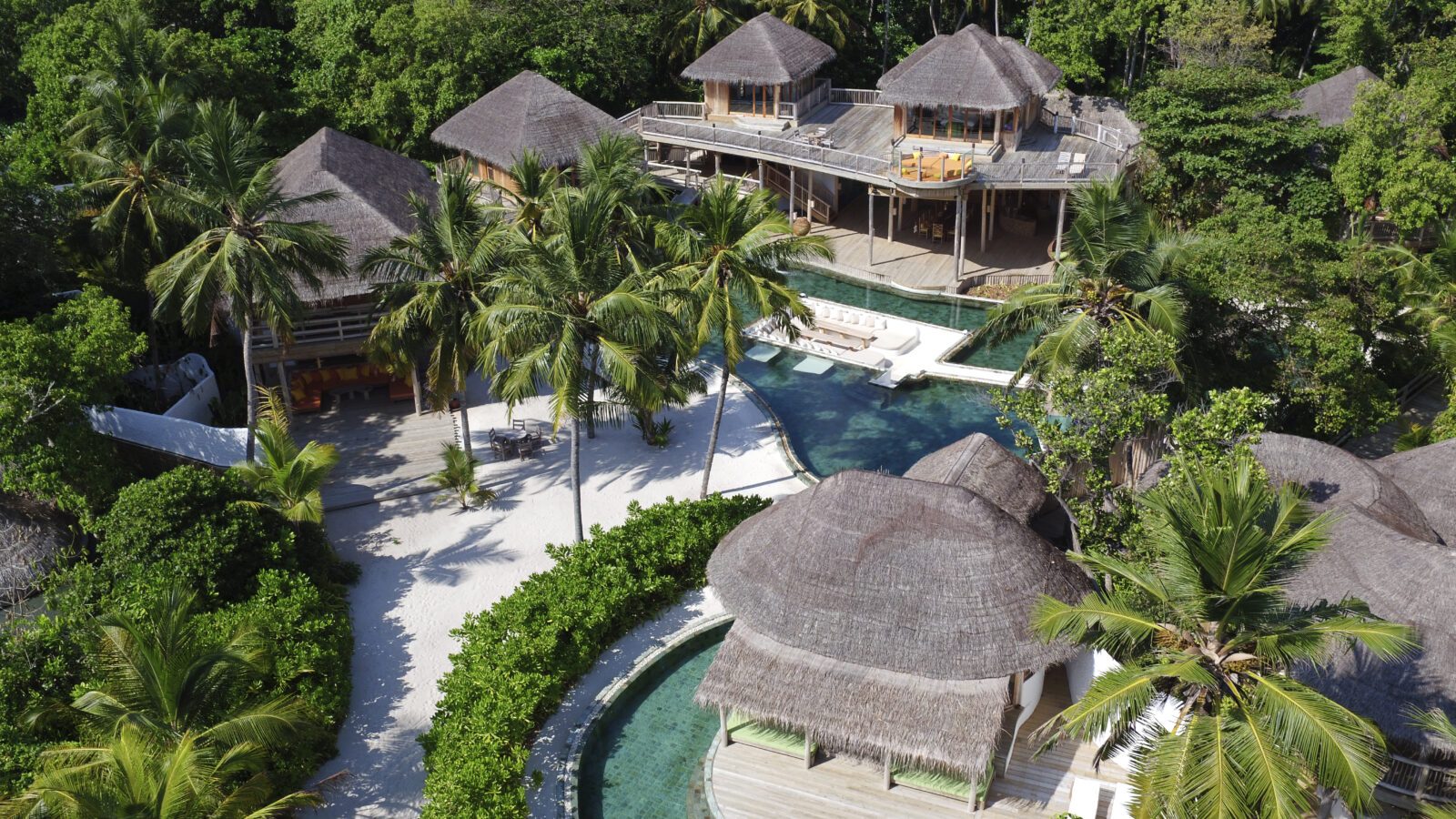
(Source: soneva.com)
Soneva’s passive approach has led to a 52% lower carbon footprint per guest-night compared to regional averages, earning accolades from EarthCheck and the WTTC.
Nightly Rate: Rates start from approximately $1,600 USD per night, varying based on villa type and season.
Website: https://soneva.com/resorts/soneva-fushi/
Why It Matters
In the face of accelerating climate change and growing tourist demand, resorts must evolve beyond energy-intensive solutions. Climate-responsive design not only reduces operational costs and emissions, but also enhances the experiential quality of outdoor spaces.
Expert Insight: Ken Yeang, Bioclimatic Architect
“The climate is not your enemy—it’s your design partner. Respecting it leads to buildings that breathe, move, and live with the landscape.”